Saturday, July 13, 2024
Thoughts
Legacy
In Newark
Near the Agent Orange factory site,
The Passaic River flows
Serenely, nothing to see
Of the poison in the fish
And blue crabs under the surface
Or in the war veteran
With the walker
On the riverbank
Friday, July 12, 2024
Dominic Albanese Books in Review
By Jan Barry
Fifty years ago
To the minute
… a sound
(I could hear quite well then)
like a soda can pop top
my cells knew
I leaped up as if I were spring loaded
the grenade exploded
… yet, the exhilaration, escape, defiance of death
Was nectar, food for my later madness
This is the kind of kick-ass poetry Dominic Albanese worked for decades to write. But when he got home from a Special Forces tour as a teenager chasing danger in Vietnam, a lifetime of distractions kept getting in the way: joy riding on motorcycles, running illegal drugs, getting addicted to illegal drugs, protesting the war with Vietnam Veterans Against the War, chasing women and more women, raising a daughter, doing fine-tune mechanic jobs on expensive sports cars and on hot stolen cars, staging robberies, enduring a stint in Folsom Prison, then a long rehabilitation with AA and CA and church folks and caring friends. Now he’s a retiree in Florida writing his recollections in poetry collections and memoirs.
The snippet of poetry above is excerpted from “April 17, 1964” which was published in Bastards Had the Whole Hill Mined: Vietnam Poems (Les Editions du Zaporogue, 2015). These war poems describe being dropped into Southeast Asian jungles on long-range patrols: “down the trail/ comes Charlie, with bags o rice/ bamboo medical supplies ammo/ wrapped in banana leaf packs/ wearing the brown hats/ with the little yellow star…” Then he cuts through what he calls the “ra ra bullshit” of war stories. “Well you have never seen/ four guys/ lie so still, so quiet so scared/ never to admit it in public”.
He also takes readers into a back alley in Saigon to share beer and reefer with a “black hair charm woman,” who tells a young soldier his fortune: “she smiled/ I can remember it like two days ago/ in Cham a lost tongue I had never heard before/ but instantly knew/ it was not a spell or a curse/ it was a sad and old/ sin loi sou di duc du kei/ (you will not die only suffer for years to come)/ now again fifty years later/ I wonder how she knew”.
In a companion poetry collection, Then N Now, published in 2015, Albanese notes that poetry helped keep him going through self-destructive times, hanging out between escapades with New York poets at the St. Marks Poetry Project and San Francisco poets of the Beat generation. “Other than having written poetry for decades,” he writes, “I have no further training in poetry—other than a deep and real trust in the healing nature of it, and the absolute pleasure it gave me to knock one out of the park.”
Among the most astute poems in this collection is “Departed But Not Gone.”
this morning
between dark to dawn
I saw a man
pushing an
empty wheel chair
causeway side walk
both side river view
it hit me
She was gone
he walked the
chair without her
not wanting her ghost
to miss
days attendance sun rise
over barrier island mangrove banks
A junior high school-dropout from Coney Island who got a GED in the Army, Albanese prides himself on writing poems in ungrammatical Brooklynese. In writing a memoir titled Dear Miss B, he writes more studiously in homage to his 7th grade English teacher who encouraged him as a flailing student hustling odd jobs and stealing cars on the side. Escaping jail time by joining the Army, after his father and a priest lied about his age, he wrote letters to Miss B from Vietnam. Years later, the woman’s daughter tracked him down on social media to share that his favorite teacher had died and mailed him a boxful of his wartime letters she had kept.
Using the recovered letters as memory aides, Albanese unravels the convoluted story of how a wise-guy kid who couldn’t sit still in grade school ended up as a Vietnamese-speaking communications specialist on Special Forces missions in Vietnam and Laos. “My first patrol up in the hills,” he wrote in an early letter, “hard to even say, how not only is it hard to pass thru the jungle, but when ya do get on the hill side, the rocks, sometimes fall, and you gotta be very careful how you move…So far it is more like some movie than it is a real war, but, bugs, snakes, birds who are loud, and monkeys who make more noise than you ever heard, one of the Yards [GI slang for Montagnards] told me when the birds and monkey are quiet you got a big problem…”
More than a year later, in March 1965, he wrote Miss B: “I am going back to Okinawa, and with just some good moves, I can stay there, or come back to CONUS, and be, outta all this madness.” Pushing the boundaries on what could be put in a letter from the war zone, he adds: “I will tell you the whole mood has changed here, more guys getting killed, and way more ambushes, outright camp overruns, and this is now, really starting to look like a war.”
Getting out of the Army in March 1966 with several thousand dollars, “a few ounces of Cambodian Red Weed, a .45 pistol, two sets of civilian clothes, and a sale brochure for Harley motorcycles,” Albanese set out from California to New York aiming for a life of adventure. His first civilian job, as recounted in a recent memoir titled 101 Elsie St (Poetic Justice Books, 2023), was hauling kilos of marijuana in a VW van from Arizona to sell to mob connections in Coney Island. In the midst of cross-country drug mule treks, he spent some time hanging out with a girl friend in New York’s East Village, where in the summer of 1967 he hooked up with some other angry vets to help launch Vietnam Veterans Against the War.
I remember Dom as being exceedingly bitter, haranguing me to make harsher statements than I felt comfortable with in my fledgling public speaking role as a VVAW organizer. I don’t recall us talking about poetry, although I also dropped by poetry events at St. Marks Church-in-the-Bowery, an East Village institution.
And then, like many vets who helped get a radical antiwar veterans’ group off the ground, Dominic Albanese disappeared. Decades later, he popped up on Facebook, interacting with vet poets and posting firecracker bursts of short poems. One day he wrote that he needed money to pay some bill and was selling copies of his books at discount. Turns out he’s the author of more than a dozen collections of poetry and two memoirs. Many of his books are listed on Amazon and lulu.com.
In his book description on Amazon for a 2019 poetry collection titled Disconnected Memories, he notes: “I have been writing poetry since I was twelve years old, and within sight of where I am sitting at the moment are more than seventy-five notebooks full of poems. When I returned to the United States from Vietnam in March of 1966 I spent at least fifteen years--in the words of Bryon--being ‘mad and bad and dangerous to know’. I suffered from post-traumatic stress disorder, a malady that could not then be named--for a few years I had an almost terminal case of it. Crime, drugs, chopped reality, fast motorcycles, women, rum and cocaine, all of these just about killed me. I went to prison for a while. Through all of that I never stopped writing poetry, even if some of my poems from those times are as dreadful as the years themselves were.”
Thursday, July 11, 2024
Life
Meditation Blues
Sleepy Sunday morning,
During chair yoga slow stretch
My thoughts wander
Like wayward clouds
The other side of 80
Is a place I never expected to be—
Eying the fast lane
From a bedroom chair
Wednesday, July 10, 2024
Hitchhiking Home from Danang Book Review
“McCarthy has led a very interesting life,” one senior wrote on ratemyprofessors.com. “He draws on his experiences in his writing and encourages his students to do the same. When I was his student he really pushed me to dig deeper and do something meaningful. He's passionate about poetry and creative writing.”
I got some insight into this dynamic while teaching journalism at the same college for several years. Gerald McCarthy also enlightened his students by bringing in as guest speakers avant-garde poets addressing war and social issues. Retired now as professor of English at St. Thomas Aquinas College, McCarthy has dug deep into his past to produce an astounding volume of literature. Hitchhiking Home from Danang: A Memoir of Vietnam, PTSD and Reclamation (McFarland, 2024) reveals the inner world of many war veterans that home folks haven’t a clue about.
“You come home alone and no one knows what it’s like…the aloneness would not let go of me, it clung like a mist or a shadow, and I couldn’t shake it,” he writes. “I felt like there was a stranger in the room, someone I hardly knew—and the stranger was me. Alone, aloof, apart. It stayed and grew and became my ‘thing’ and I could not shake it or find a way out of the despair and unrest it brought.”
There were things that happened in Vietnam that he couldn’t talk about. He couldn’t find words for what troubled him when he went AWOL from a Marine base in Norfolk, Virginia. He couldn’t blurt it out when he ended up in jail, in a military brig and in a Navy hospital psychiatric ward. He couldn’t say, years later, when his 18-year-old son asked what happened.
“I tell Nate, ‘Well, I just left, I’d had enough of it, you know.’ And I think that’s close to the truth, but I’m leaving things out on purpose,” he writes. “I’m leaving out the nightmares, the waking sweats…I’m not telling him about the flashbacks, about the dead, about the other stuff.”
There were no words for what to say about the war for 19-year-old combat vets coming home in 1967. Words like post-traumatic stress, survivor guilt did not yet exist. Grief was not in the lexicon of a Marine. Even years later, he couldn’t tell his wife about the damn, disturbing dreams that kept popping up.
“My wife shakes me in the dark and asks, ‘Who are you talking to? Why are you so restless?’” He couldn’t tell her that sometimes he was intently talking with dead buddies, that he was suddenly remembering a sergeant’s drunken screams about the horrendous casualties in the 1965 invasion of the Dominican Republic, the explosions of the mortar attack shortly after he got to his field unit, the mortar attack on the Danang airfield when he was about to leave for the States, the airplane burning, men scrambling out of the flames, and so many other ways Marines died in Vietnam.
“And then the others too, after I came home, after I was discharged, after all the ‘military madness’ had ebbed and I was drifting in a cloud of stelazine and beer and regret,” he wrote. “Bill Shaw crashing his old Corvette into a tree at night…Dennis Michaels…hung himself in his parents’ home…two months back from his time with the Army.”
McCarthy struggled through classes at a state college. He got into the Iowa Writers Workshop, where professors told him the war was over and to write about other things. He wrote poetry about the war to try to describe it. War Story: Vietnam War Poems (The Crossing Press, 1977) took a crack at it. It described the elements of PTSD before the malady was named by the psychiatric establishment. That first poetry collection caught the attention of Gloria Emerson, the fabled New York Times war correspondent, who became a mentor. She got him an assignment to write an article about the dedication of the new Vietnam Veterans Memorial in Washington, DC. “You have to go down there and cover the dedication ceremony and then you’ll write a poem about it later,” she told him in a telephone call. “First you get paid to write about it and that will cover your expenses.”
He reached out to other vets, joining Vietnam Veterans Against the War. He offered writing workshops for vets, taught writing at Attica prison, in migrant labor camps, county jails, schools. By the time he became a college professor, he knew a lot about how to help other people tell their stories.
But he struggled to tell his own. This book is focused on revealing, 50-some years since his return from war, what he found so hard to talk about. In retirement, he can no longer hide behind the sandbags he erected as a college professor who took on extra work, including teaching at the American Academy in Rome and at local schools.
“Now they come back when I’m alone, and in the dusk those shadows start to materialize. I can see them—glimpse their faces—this legion,” he writes. “And they are there waiting. They know I have had a life. And I have to join them at some point. I keep trying to tell a few stories, push away from what is there… I think the solution is to learn how to speak to people again, to try to communicate, to keep forcing yourself to wake up. You can’t give in to the ghosts, to the grief, to the overwhelming sadness.”
And he discovered another insight. “Now 50+ years later, and after four years of therapy at the James A. Peters VA Hospital in Bronx, New York, I have come to realize that the tranquilizers were a stumbling block to my recovery,” he writes. “Now I know I needed therapy and counseling. Now I know the tranquilizer led to other depressants like alcohol…and drugs, to feeling depressed and full of self-loathing.”
As a persistently creative poet and writer, Gerald McCarthy demonstrates in this book how he helped forge a better way of dealing with PTSD and survivor guilt: write it out.
Update
Summer Song
I escape the crowds and summer heat,
hanging out in our backyard botanical garden—
ringed by a long overgrown privet hedgerow
entangled with grape vines on one side,
an old apple tree and towering elm
sheltering butterfly bushes and
a rainbow array of flowers in the back,
plus a meditation garden behind the garage
that’s nestled amid butterfly bushes,
a sprawling hemlock with multiple tops,
and a conclave of rock walls—
here I can sit and commune with
butterflies, humming birds,
song birds flitting from bird feeders
to bird bath to hidden nests
Monday, May 3, 2021
What's Up
"Sneakers" (Jan Barry photo)
Stumbling Around
Three small strokes
Rearranged my brain—
Trying to see what still works
Wobbly balance exercise
Revives muscle memory of toes
In cross-country skiing
First base catch move
Restores arthritic right hand
When an errant ball appears
A month of hard core PT
Turns shuffling waddle
Into senior citizen steps
--Jan Barry
Sunday, March 14, 2021
Covid Year
Mask with Birds (Jan Barry photo)
By Jan Barry
A year of hair
Unfurls down my neck—
I’ve outlived a pandemic
So far
Millions dead and dying
As preening politicians bicker—
What’s there to celebrate
In this covid time
Lost my job, my livelihood,
Quarantined from friends
And family gatherings,
Hunkering from death’s breath
Only the lucky
Are still living—
Living like moths
Flitting amid the flames
This is what depression
Looks like, as year 2 looms—
I’d rather soar with eagles
And migrate with the seasons
Tuesday, February 23, 2021
Morning on the Hackensack River
By Jan Barry
A confluence of eagles
at a narrow bend in the river
lined with gnarled old branches
leaning over the water
flowing between snow-crusted
stretches of woods—
the silence broken by commuter
trains, truck engines, Canada
geese, mergansers foraging for fish
Saturday, February 20, 2021
Anne Crumb, RIP
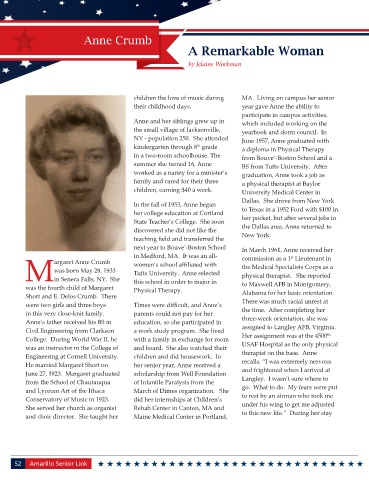
My first vivid memories of Aunt Annie have to do with “slow poke passing” in our 1950s cars on a country road when I was a teenager. About that time, she joined the Air Force as a physical therapist. About a year later, I joined the Army and visited her on a weekend pass at her bayside place outside Langley Air Force Base in Virginia. Then I went to Vietnam and she went to Libya. Our lives went in different directions. But we stayed in touch over the years.
Home base was the Taughannock Falls area of New York’s Finger Lakes, where we occasionally met up at family gatherings. One summer Anne announced that she preferred living in Texas. When I swung by her place in Amarillo on a drive to California after I retired from newspaper work, I learned why. She liked the wild flowers, the wind-swept vistas, the wide open skies of the high plains. She had friends who’d turned an empty shopping center into an artists’ colony. She loved rambling out of town to the jaw dropping splendor of Palo Duro Canyon.
About a decade ago, she moved into a senior living complex, as various ailments cramped her hands and walking became progressively hazardous. She gave her kayak to younger relatives. She enjoyed entertaining visitors, venturing out to a favorite Mexican restaurant next door. Checking in on her during the Covid crisis last summer, I found she’d moved to a state veterans’ home.
Amarillo Senior Link magazine in 2019 profiled her in a special issue honoring military veterans. My favorite anecdote in this account tells how after graduating from college in 1957, “Anne took a job as a physical therapist at Baylor University Medical Center in Dallas. She drove from New York in a 1952 Ford with $100 in her pocket.”
Thursday, January 28, 2021
Breaking News
Snow flurries this morning,
A wondrous break
In a bleak winter
A flurry of eagles flits
Along the Hackensack River
Turning Jersey into a winter haven
--Jan Barry
Monday, January 11, 2021
Insurrection 2021
An insurrection in Washington
In January set off
An horrific new year—
Aiming to nullify the results
Of November’s election for president,
It gained added fury when a black man
And a Jewish man won a special election
For US Senate seats in Georgia—
The mob rampaged through the Capitol building
With nooses, Confederate flags,
Neo-Nazi slogans—
“Camp Auschwitz” read one—
And broke into the House and Senate chambers
Seeking scurrying lawmakers—
“Hang Pence!”
Hate-contorted men and women shouted,
Hot on the trail of the vice president—
Breaking into House Speaker Nancy Pelosi’s office
With guns and plastic police handcuffs
Wednesday, December 30, 2020
World Sustainability and COVID
The fall 2020 semester at Ramapo College opened in the midst of global crisis due to the Coronavirus pandemic. Only a few students and faculty were allowed on campus, primarily for lab courses. Most classes were held online. Despite precautions, COVID-19 swept through my World Sustainability class of 31 students and their families. Suddenly the concept of studying global environmental and social crisis was no longer theoretical.
The possibility of impending catastrophic climate change took on a new perspective, as within a few months the United States of America staggered from a once-in-a-century public health crisis that triggered economic collapse in much of the world’s trend setting economy. In many ways, our society seemed to be wandering in a fog.
An international cast of undergraduate students dug into what was happening around the world—researching and writing case studies set in India, Nepal, Thailand, Vietnam, China, Russia, Poland, Greece, Syria, Africa, Australia, Latin America, Canada, New Jersey, New York City and elsewhere.
Probing discussions were stirred up and guided by fellow World Sustainability professors Harriet Shugarman and Amanda Nesheiwat and environmental activists Paula Rogovin and Sam Difalco, who joined the class via Zoom. The entire class attended an online conference on youth climate activism and the presidential election hosted by Ramapo Green, a campus environmental group. Students were also encouraged to write about what they learned from their experiences.
Here’s a selection of their work in the midst of the COVID crisis:
http://ramapolookout.blogspot.com/
Monday, October 19, 2020
Biden and World Sustainability
“Vote as if the Climate Depends on It”
That’s the headline of a call to action by Bill
McKibben in The Nation recently. This clarion call by the founder of 350.org to
counter Donald Trump’s disastrous environmental policies in November’s
presidential election also appeared in Rolling Stone and other publications.
Endorsing the Democratic ticket of Joe Biden and Kamala Harris, McKibben
stated “their climate plan is the farthest-reaching of any presidential ticket
in history. More to the point, we can pressure them to go farther and faster.
Already, seeing the polling on the wall, they’ve adopted many of the proposals
of climate stalwarts like Washington Governor Jay Inslee. A team of Biden and
Bernie Sanders representatives worked out a pragmatic but powerful compromise
in talks before the Democratic National Convention; the Biden-Harris ticket
seems primed to use a transition to green energy as a crucial part of a push to
rebuild the pandemic-devastated economy.”
Furthmore, he added, “they’ve
pledged to try to lead the rest of the world in the climate fight. The United
States has never really done this. Our role as the single biggest producer of
hydrocarbons has meant that our response to global warming has always been
crippled by the political power of Big Oil. But that power has begun to slip.…”
Despite Biden’s
reluctance to rein in the hydro fracking industry in his home state of
Pennsylvania, his campaign platform endorses the goals of many states to phase
out fossil fuels by 2050, with a major milepost “to achieve a carbon
pollution-free power sector by 2035.”
Other steps in Biden’s
proposed transition includes hiring former coal miners and other workers to cap
old, leaking oil and gas wells, and safely close and remediate abandoned coal
and uranium mining sites that are polluting local waterways and communities. “Biden
will also hold companies accountable for the environmental damage of their
operations, including by clawing back golden parachutes and executive bonuses
for companies that shift the environmental burdens of their actions onto
taxpayers,” his website added.
Another transition
step, long sought by many environmental activists, would create a Civilian
Climate Corps that would hire diverse people “to work conserving our public
lands, bolstering community resilience, and addressing the changing climate,
while putting good-paying union jobs within reach for more Americans, including
women and people of color...” This plan would build on the pioneering work of
the Civilian Conservation Corps during the Great Depression that marshalled an
army of young men and military veterans to replant logged out forests and
create campsites, trails and other infrastructure in state and national parks.
Addressing a major
problem that many communities in cities and rural areas have faced for decades,
Biden pledges to “ensure that frontline and fenceline communities are at the
table when enforcement, remediation, and investment decisions affecting those
communities are made. Biden will ensure working groups on these issues report
directly into the White House, so that communities facing the dual threat of
environmental and economic burdens have access to the highest
levels of the Biden Administration.”
Bill McKibben’s call to
vote for Biden and continue pressing him to deepen his environmental plan should
be widely shared.
Tuesday, September 1, 2020
Raising Butterflies

Holding hands (photo/Paula Rogovin)
Raising
Butterflies
By Jan Barry
Raising
butterflies takes work,
Fine
motor skills and patience—
Start
with finding a fly speck of an egg
On
a milkweed leaf,
Put
the leaf in a jar,
Cover
it with mesh—
Wait
a couple-three days
Until
a tiny caterpillar appears
On
the leaf—
Clean
the tiny poop out of the bottom
Of
the jar every day—
Drop
in a fresh leaf
For
the growing cat to munch on—
Repeat
a few times—
One
day a very large caterpillar
Climbs
up the side of the jar
And
creates a chrysalis
Hanging
on the mesh cover—
Now
you’re hooked—
Look
it up—
This
process of becoming
A
butterfly takes a week or two—
Check
it out every morning—
Lunch
time—supper time—
Before
bed—
See
the chrysalis develop a gold ring—
And
one day turn translucent,
Become
a sack of water—
Oh
my god—the next morning
A
monarch butterfly pops out—
Flaps
its wings—
Wants
to go out into the world—
So—cell
phone camera ready—
You
release it
Into
the stormy, dangerous world
Sunday, July 26, 2020
Peace in Korea
![]() |
| Peace in Korea demonstration, Teaneck, NJ 7/23/20 |
Thursday, July 2, 2020
Summer of Death
![]() |
| Self-portrait (photo/Jan Barry) |
Saturday, June 20, 2020
Southern Heritage
| "War's End" by Jan Barry |
Saturday, April 11, 2020
Warrior Writers NJ Salute to Perry Rosenstein
| "Back to Nature" by Jan Barry Puffin Cultural Forum Calendar Feb. 2018 |
Monday, April 6, 2020
Warrior Writers NJ Online Writing Continued
| "Spring Flowers" by Jan Barry |
Week two of Warrior Writers NJ’s coronavirus-quarantine, online workshops on Zoom, on Sunday, March 29, featured literary call and response between and among five veterans and three military family members. The prompts included military medical call up—one of the latest government actions to assist beleaguered community hospitals overflowing with covid-19 patients—music, spring, and anything else one wanted to write about. It led to a lot of what Tara Krause called “spontaneous poetry” and spirited discussion.
Overflowing Hospitals
By Jan Barry
The military has issued
An emergency call up for former medics
And other medical personnel
To help with the coronavirus crisis—
Things are getting serious—
Convention centers are being turned into
Field hospitals—
This war I can relate to—
If I were younger and able
I’d volunteer
Like Walt Whitman
To help the hospitalized
The Call-up
By Paula Rogovin
I’d rather see veterans
Called back to service
To build makeshift hospitals or work on hospital ships
To supply test kits, ventilators, and
N95s not M-15’s
To meet the battle needs
For this war -
The great global war for LIFE!
Music
By JoAnn Drozd
Music - is my life blood, a savior in the midst of great grief.
Listening to Kembo doing America the Beautiful & Hauser playing Can’t Help Falling in Love on Facebook & Instagram provided me with some clarity and humility.
After taking in too much news, Bob’s 3500 songs on his i-pod helps me get through the day. It helps remove the stress from the political craziness of the day. Brings me some sanity, a retreat of sorts.
The music and songs seem so much more meaningful. Listening & hearing them in a whole new way. Hope it brings all those impacted on the front lines of this crisis the feeling that things will resolve and return to some level of normalcy. I also hope we will all be changed for the better & remember the importance of human connection after this disconnection.
Funny how so many of us spent many moments of our days attached to our phones or other devices and now we crave each other’s company.
Music - the GREAT connector.
Hits of the Sixties
By Nancy Elkin Nygard
My father told me, if it's true it's not bragging. This is true.
Walt Nygard is a AAA Star DJ !
At HIS right time he will get on youtube and boom!
I'm Blowin In The Wind to the Sounds of Silence.
And then, For What It's Worth, I wanna know
Who'll Stop The Rain?
His knowledge is amazing, a real student of
Rock n roll of the 60's.
So this Pretty Woman can Walk Like A Man and
This Wild Thing can Turn, Turn, Turn.
Can you Imagine going Downtown
But all you do is Wipeout!
Well, Don't Worry Baby it's Written On The Subway Walls
So Please Please Me Dear Prudence and stay home and dance!!
Spring
By JoAnn Drozd
Flowers to breathe in
Shrubs to admire
Trees to climb high
Soil to dig deep
Rain to boogie in
Sun to shine
Earth to save
What a stupendous gift we’ve been given. Let’s REJOICE in new growth and beauty. Let’s not waste another single precious moment. This world is ours to save….
Spring & Music:
Spontaneous poetry prompt’d
By Tara Krause
All complex systems in perturbation
Reach new states,
Equilibrium might be euphemistic,
But new states (un)certainly.
This week showed glimpses of
People’s hope in giving,
Across town, county, state, region, globe.
Our bioregions collapse into
Hot zones and faulty testing tracking scoreboards,
Wracking up bodies in the morgue.
Hope in giving as the mindful exhale
After the first reflexive intake of panic,
Triggers the neural cascade of altruism,
Solidarity and love in action.
The live streaming of jazz concerts, both
Unlocked from the archive vaults, and
Spontaneous jams streamed from bedrooms.
Notes and chord changes disaggregated into
pixels and bites, to meet our souls in
Neural new meanings.
My challenge, certainly trivial in the face of humanity,
Yet real to me at this moment:
Can hope in giving extend to self-love?
Can I allow my hope in giving to lead me into
The beauty of prepping new growth in the garden?
To the primal pleasure of thrusting
My hands into the thawing soil,
To give myself to life itself?
Reunited
By James Yee
I reunited with an old friend this week. I hadn’t seen her for quite a while. I think the last time was when I was in elementary school. I saw her almost every day back then. It was like I couldn’t go a day without her. Interesting though, we parted ways, for the most part, once I graduated into junior high. And after that I never really thought much about her from then on out. But who would have guessed that it would be all the quarantine and shelter in-placed measures imposed on us that would bring us back together. I will admit, there was a direct action choice on my part. But to make a short story even shorter, once back in the seclusion of my own home, when I was ready and feeling very hungry, I whipped her up again and put her together. When we physically connected, now inside my kitchen, my tongue instantly told me that she was just as I remembered. She made me happy once again. I’m so glad I brought home the peanut butter, grape jelly and a loaf of bread. For her name is PB&J – or more formally, Peanut Butter and Jelly! Maybe you know her as well.
Thank You Coronavirus for bringing us back together.
A Haiku with Slattern Extra Syllables
By Tara Krause
James Yee rises, takes to the streets
To feed deep human need;
Cup cakes are indeed essential.
Monday, March 23, 2020
Warrior Writers NJ Workshop Goes Online
| "Weathering a Storm" by Jan Barry |
Warrior Writers NJ’s scheduled workshop for Sunday, March 22, 2020 took place via the web application Zoom from 12 noon-2pm. The group adapted this virtual format in response to the social distancing measures directed by government and health officials to help curb the spread of the coronavirus known as Covid-19.
by Tara Krause
purple truth ascendant.
The neighbor’s forsythia yellowed their welcome
along the fence.
while a titmouse began his song for companionship.
while Bodhi my service dog barked her first bark, hackles up,
to run off the piebald doe prepping the corner of the
garden for her annual birthing rite.
It is time.
to sow clover for the bees and
to shore up the slopes.
poppies, larkspur, calendula, cleome and cosmos.
now to be fertilized.
echinacea and rudbeckia, but worth a try.
to start the lasagna tins of seeds.
Even in pandemics, quarantine & panic.
first responders
as always
suit up on a daily basis
un-flagging.
as said to veterans.
though ever present and giving,
step forward into the breach of pandemic:
the doctors,
the teachers,
the babysitters,
the home health aides,
into our imposed social distancing and virtual reality.
of expresso, dark chocolate and cigarettes in quarantine;
the supermarket aisle restockers, who risk all for minimum wages
and no medical benefits;
the butcher, who scraped the last pound and a half of ground sirloin
off the grinder machine so that my service dog could continue her raw diet at least for another day;
the new workers at the Paterson plant, who now make the toilet paper to replenish the nations’s empty shelves.
“You do not have to kill to serve.”